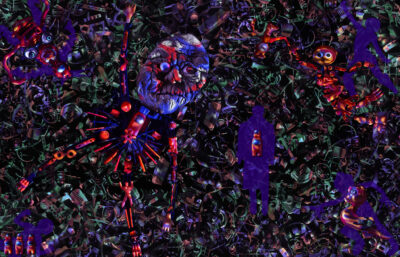
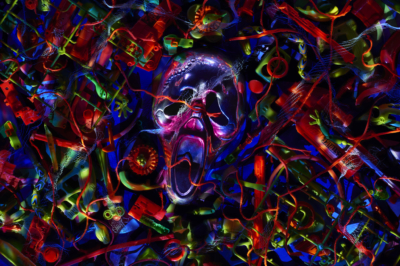
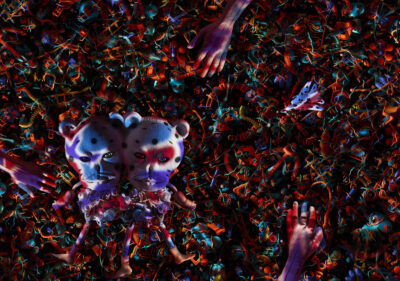
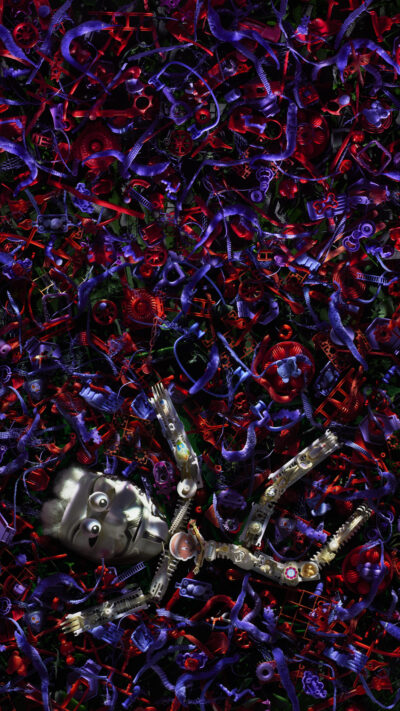
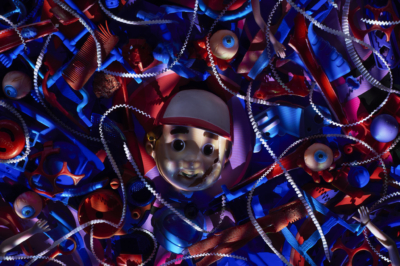
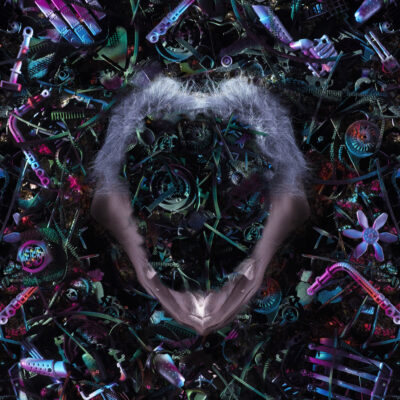
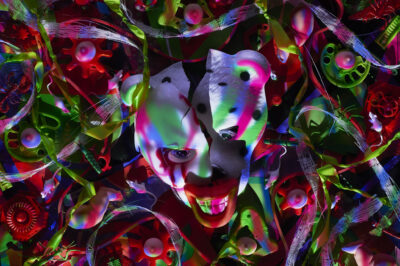
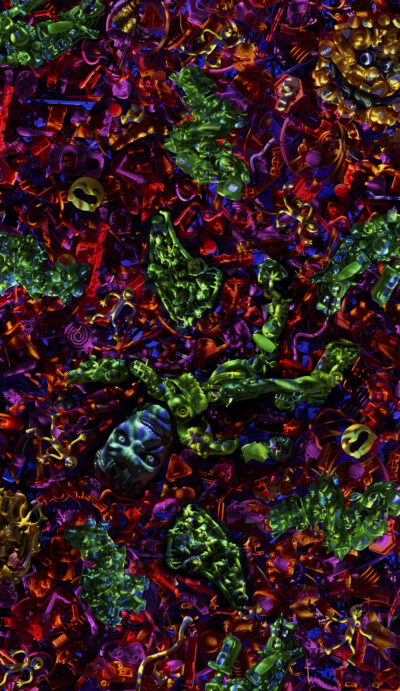
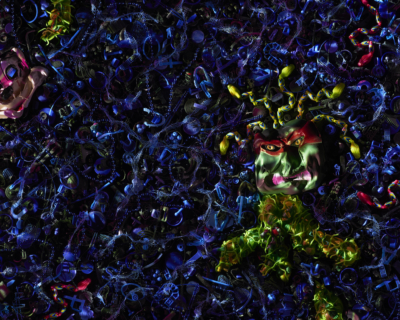
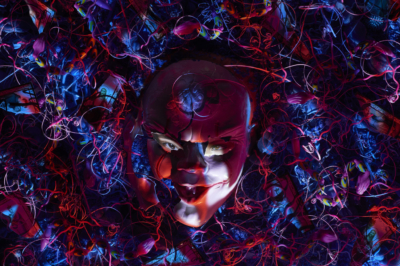
Inspired by society’s discarded objects, Lane creates constructed photographic spaces marked by aggression, anxiety, and contradiction. Working in the studio, he stages found materials—objects carrying visible histories of use, circulation, and familiarity—under controlled conditions across multiple photographic sessions. Selected for the meanings they already hold, these objects are sometimes left intact, and at other times deliberately stressed, altered, or physically combined. As elements accumulate, no single configuration is sufficient to contain their relationships. Objects therefore reappear across shoots and are recomposed into composite images built from fragments captured at different moments. The resulting photographs do not function as transparent windows onto singular scenes, but as mediated spaces where meaning emerges through proximity, repetition, and unexpected interaction rather than through the logic of the “decisive moment.”
Lane’s compositions are intentionally chaotic, assembling incompatible forms and conditions within a single photographic field. Compositing operates not as a corrective technique, but as a structural response to density—allowing contradictory histories, scales, and emotional registers to coexist. Within this unstable terrain, the most banal objects are activated for their mythic and symbolic potential.
By embracing the tension between control and disorder, Lane navigates an uncanny space where the creepy and the mythic overlap. These cumulative constructions resist fixed meaning, producing open‑ended meditations on consumption, masculinity, and the mechanisms of visibility and erasure that shape contemporary culture.